Before and After Garden Renovation: Why Exceptional Landscape Transformation Can Significantly Enhance Living Quality and Property Value
Garden Renovation Before & After: Why Exceptional Landscape Design Significantly Enhances Living Quality and Property Value
In high-end residential projects, the before-and-after comparison of a garden renovation is never simply about "creating a beautiful garden." Truly outstanding landscape design must simultaneously address four dimensions: the architectural character, living habits, spatial efficiency, and long-term maintenance. When outdoor spaces are systematically planned, they not only elevate the daily living experience but also significantly enhance the overall sophistication and value of the property. This article will professionally deconstruct the design logic behind garden renovation before-and-after comparisons, helping readers quickly establish clear judgment.
1. The Core of Garden Renovation Before & After Is Not Piling Up Elements, But First Establishing Spatial Order
Many people's first reaction to landscape design is the "visible elements"—plants, water features, lighting, paving. However, from a professional perspective, what truly determines whether a project is sophisticated is often not the individual elements themselves, but the clarity of the overall order. This order includes whether the circulation is smooth, whether the functional zoning is reasonable, whether the visual focal points are clear, and whether the indoor and outdoor spaces form a continuous experience.
A mature garden renovation before-and-after plan typically begins by analyzing the building's entrances, primary users, habitual resting spots, and sunlight and wind direction. It then determines which areas need to be open, which need to be enclosed, which spots should become visual highlights, and which should serve as quiet backdrops. Only when the "structure" is well-established can the subsequent style, materials, and plant combinations truly come together.
2. How Spatial Planning Is Done Determines Whether the Garden Renovation Before & After Is Ultimately "Usable"
Many projects look beautiful but have low usage rates after move-in. The core reason is usually not aesthetics, but that the functional layout was not organized around real life. Therefore, when planning a garden renovation before-and-after, it is recommended to prioritize the following questions:
1. Does the homeowner value viewing aesthetics more, or practical use?
2. Are there needs for family gatherings, outdoor dining, children's activities, or pet activities?
3. Is this space better suited for quiet solitude or social interaction?
4. Are the usage patterns different during the day versus at night?
Once these questions are clarified, functional zoning becomes more accurate. A high-quality garden typically includes an arrival zone, a transition zone, a core resting zone, an auxiliary landscape zone, and a nighttime ambiance zone. When these areas do not interfere with each other in terms of circulation and visually echo one another, the entire outdoor space will exude a true sense of sophistication.
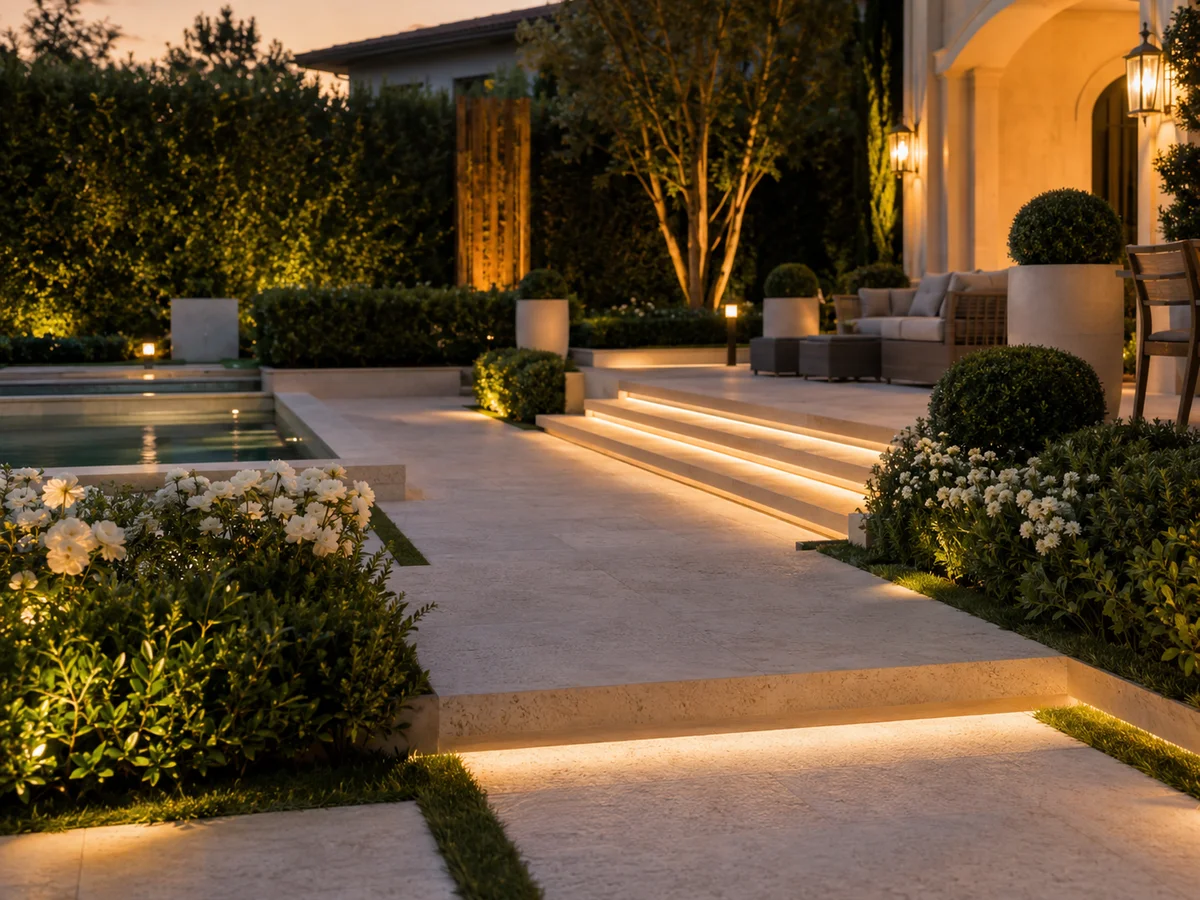
3. Materials, Plants, and Detail Control Are Key to Elevating the Layering in Garden Renovation Before & After
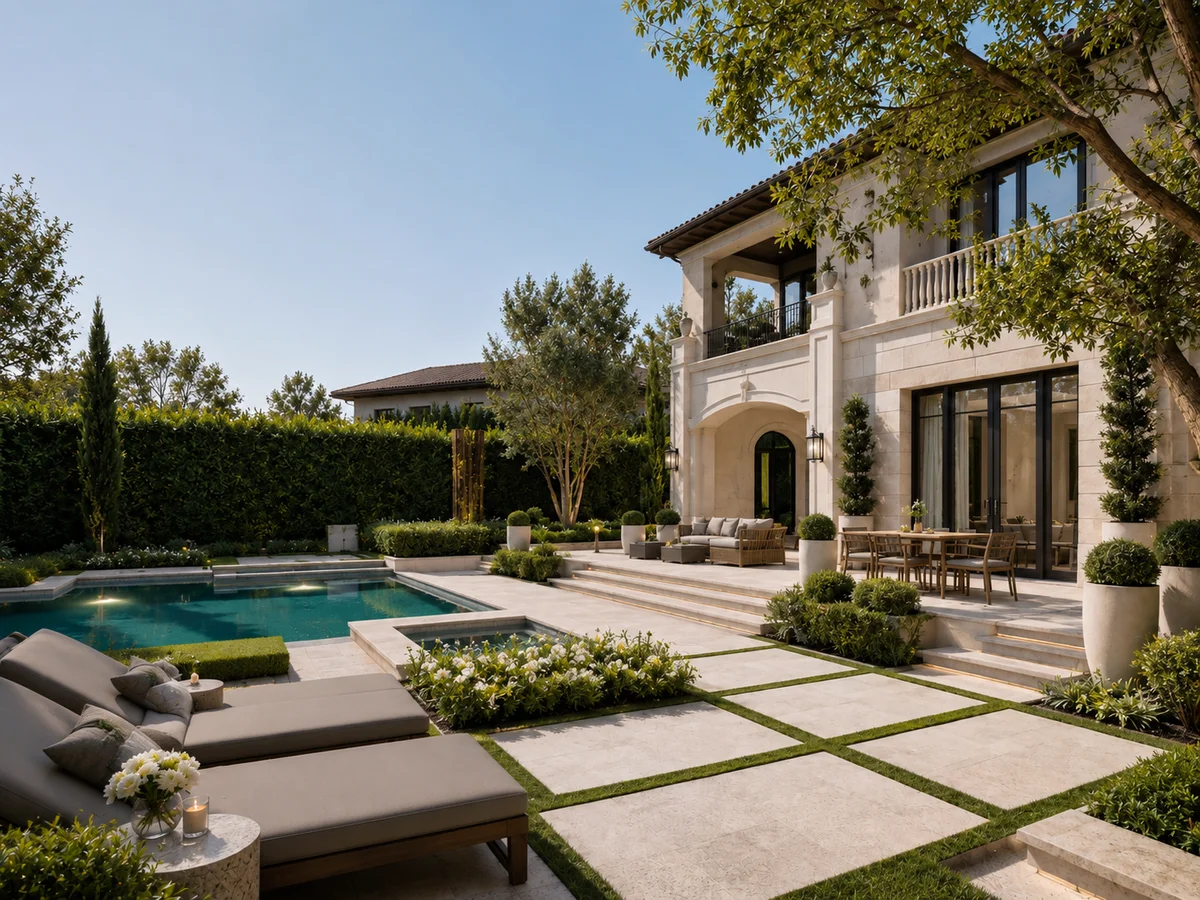
A sense of sophistication does not necessarily come from expensive materials, but rather from the harmony between materials, restrained proportions, and clean details. Common high-end landscape materials include natural stone, wooden decks, weathering steel, microcement, washed gravel surfaces, and low-reflectivity glass. When used appropriately, these materials can give the space a stable, enduring, and architectural character.
Regarding plants, it is not recommended to pursue variety for its own sake. Instead, it is better to establish clear layers: background trees, structural shrubs, groundcovers, and accent plants each play a different role. Background trees define the spatial atmosphere, shrubs shape the boundaries, groundcovers ensure overall unity, and accent plants create memorable focal points. If the plant layers are chaotic, even the most expensive space can appear cluttered.
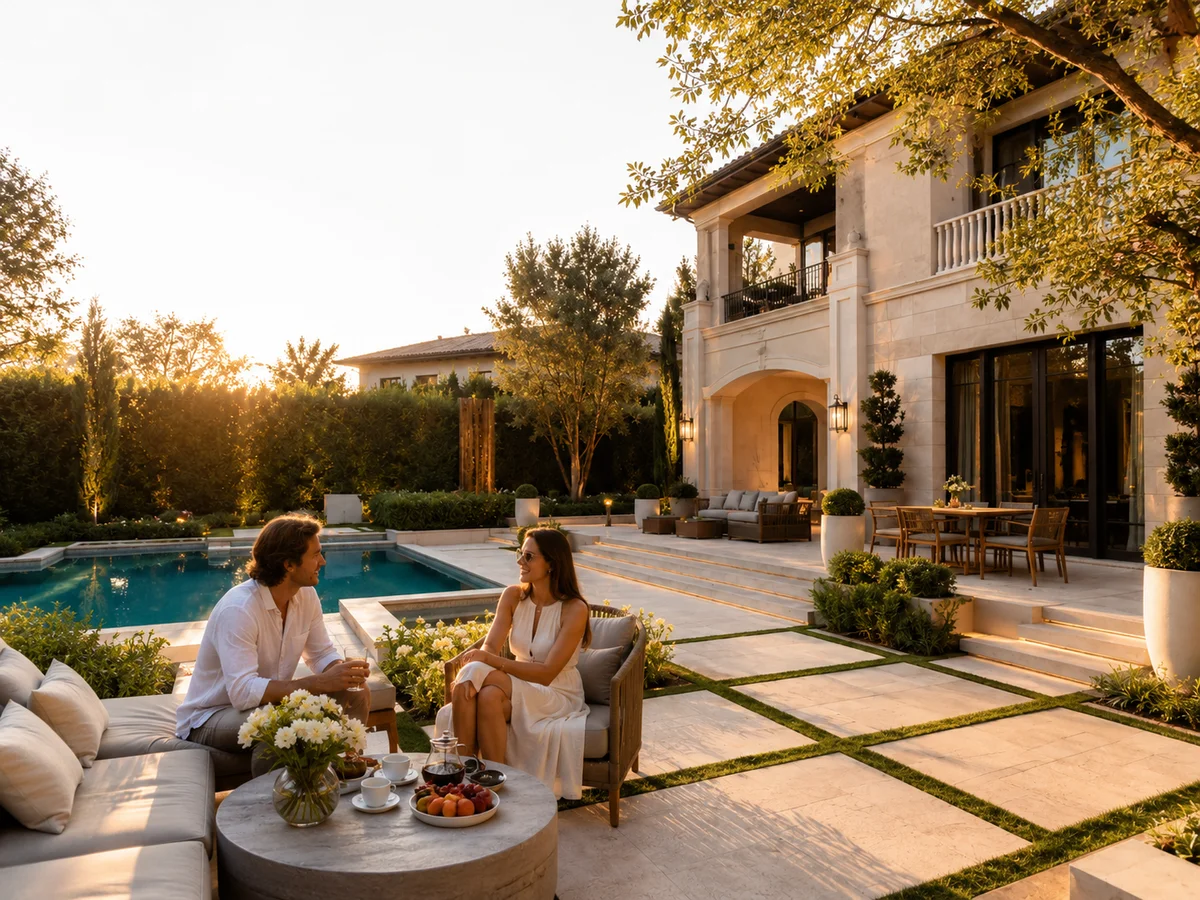
4. Making the Space Truly Usable Is the Most Advanced Expression of Garden Renovation Before & After
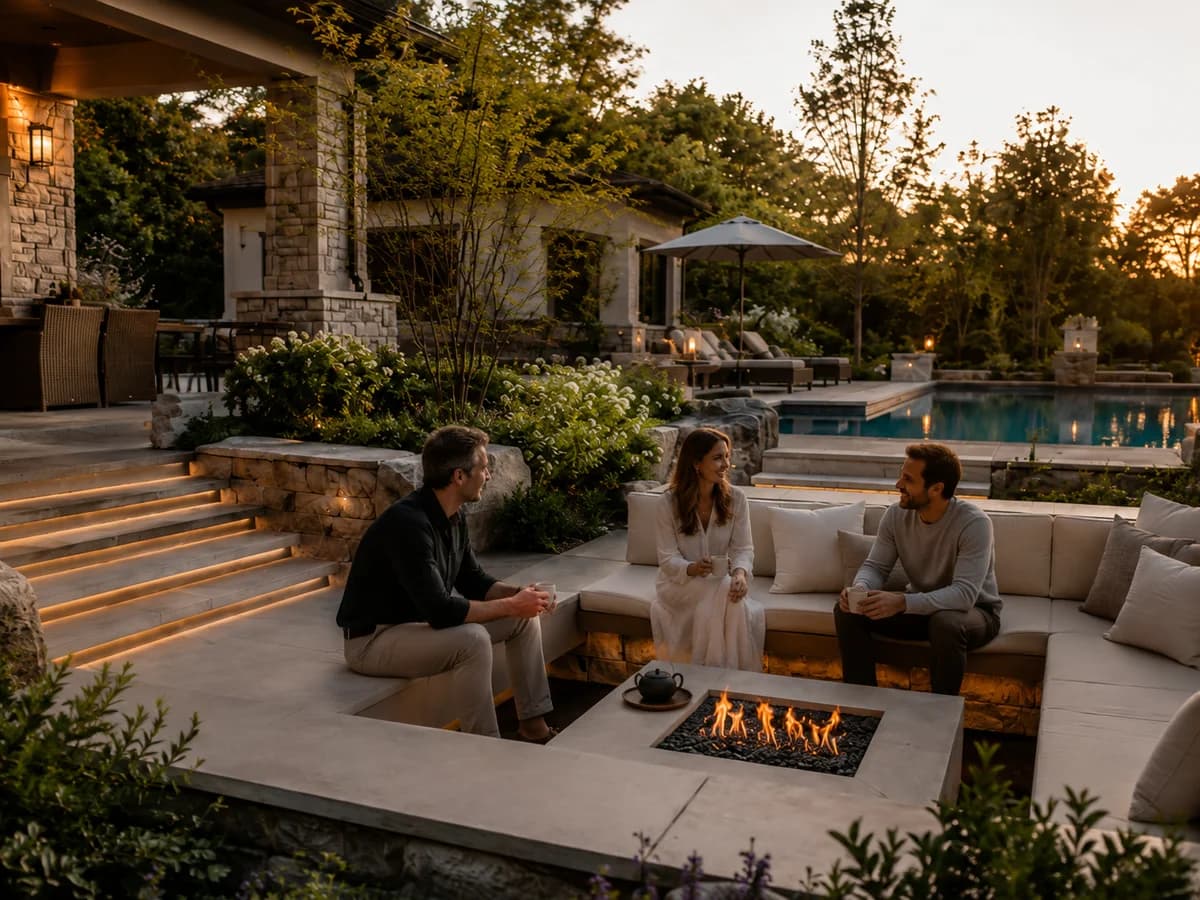
Many people focus only on whether the garden "looks good in photos" when designing it, overlooking that what truly determines long-term value is whether the space will be used. A truly mature design should invite people to sit down, relax, have tea, read, gather, and even naturally step outside for a moment at the end of the day. This is why high-end projects often emphasize lounge areas, outdoor dining zones, semi-shaded terraces, poolside lounging areas, or fire pit seating areas.
From a lifestyle perspective, landscape is not an accessory outside the building, but an integral part of life itself. When the design takes into account the rhythm and emotions of the inhabitants, the entire project evolves from "looking good" to "truly livable."
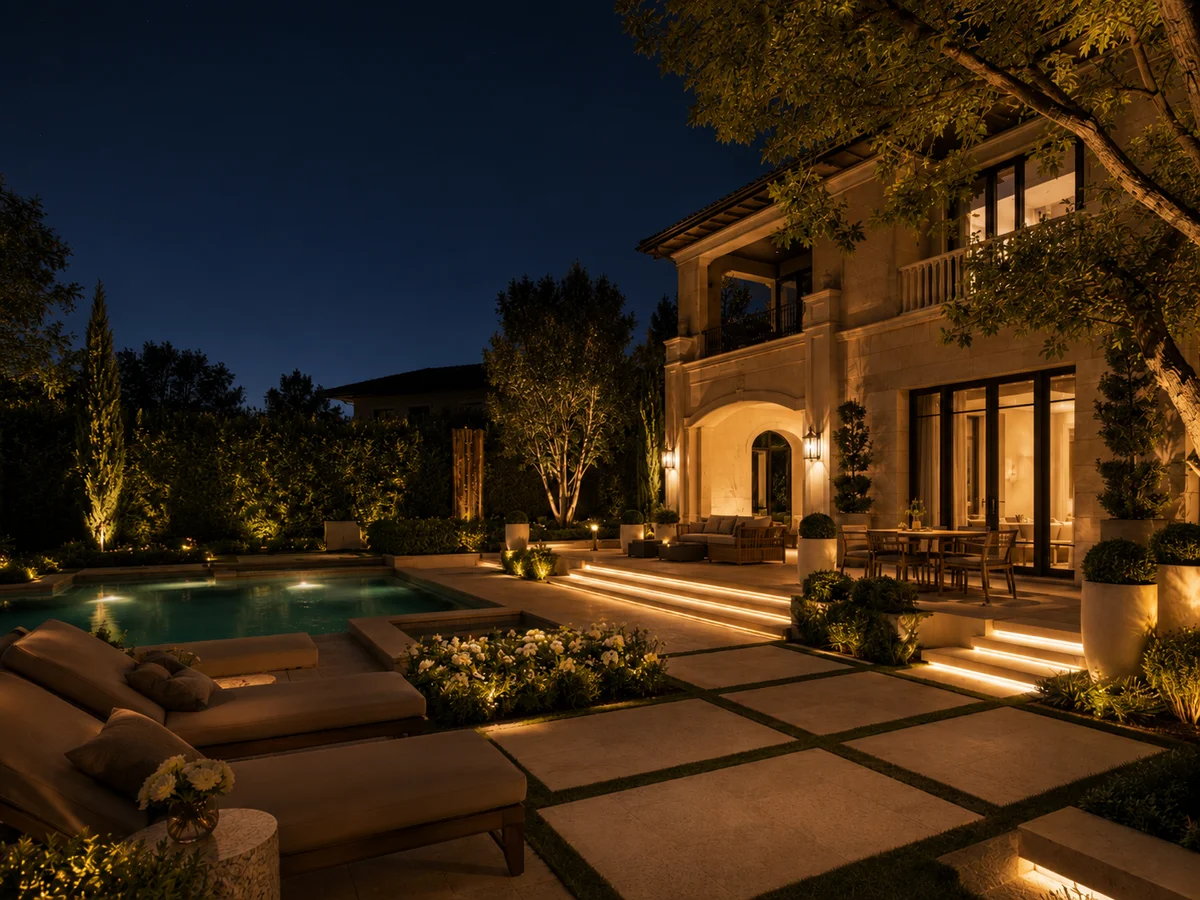
5. Nighttime Ambiance Is Often the Most Overlooked Yet Most Impactful Aspect for Elevating Sophistication in Garden Renovation Before & After
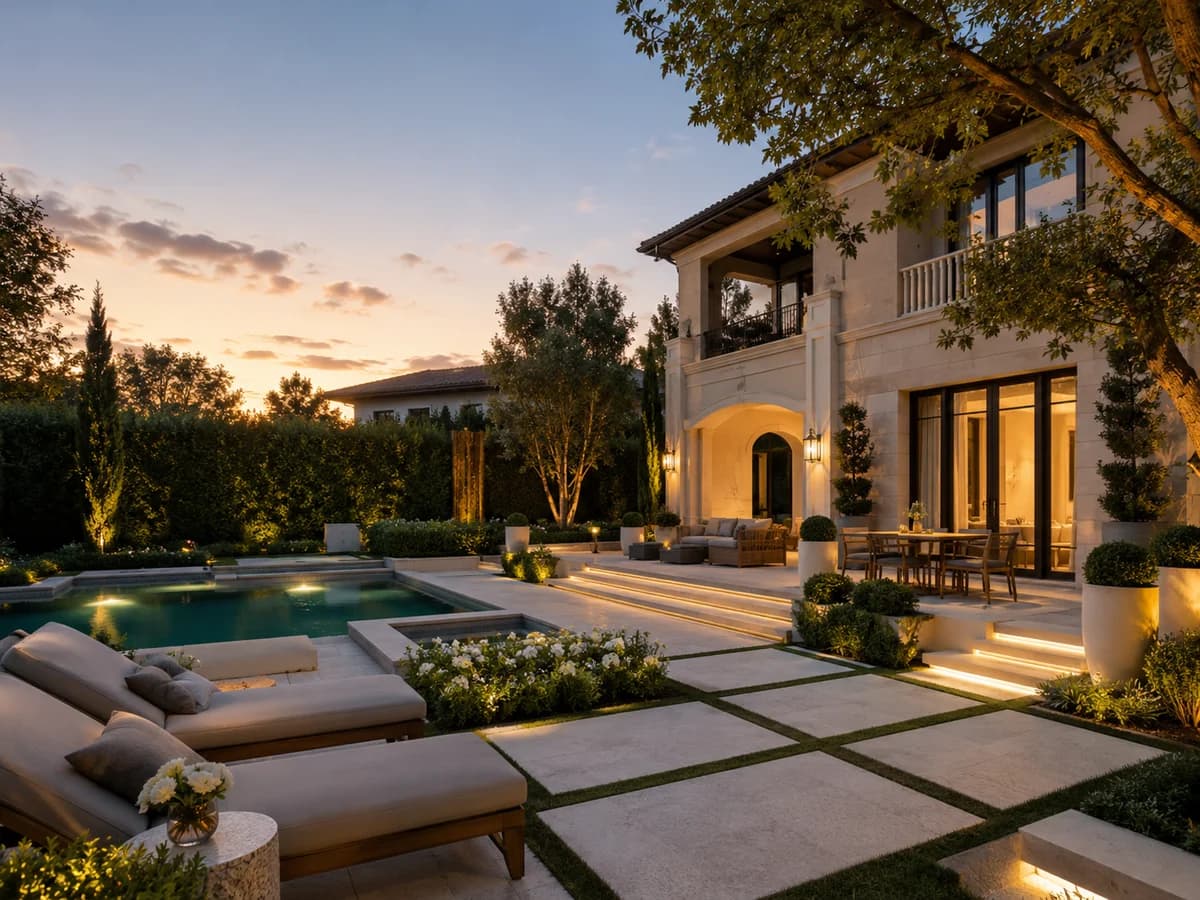
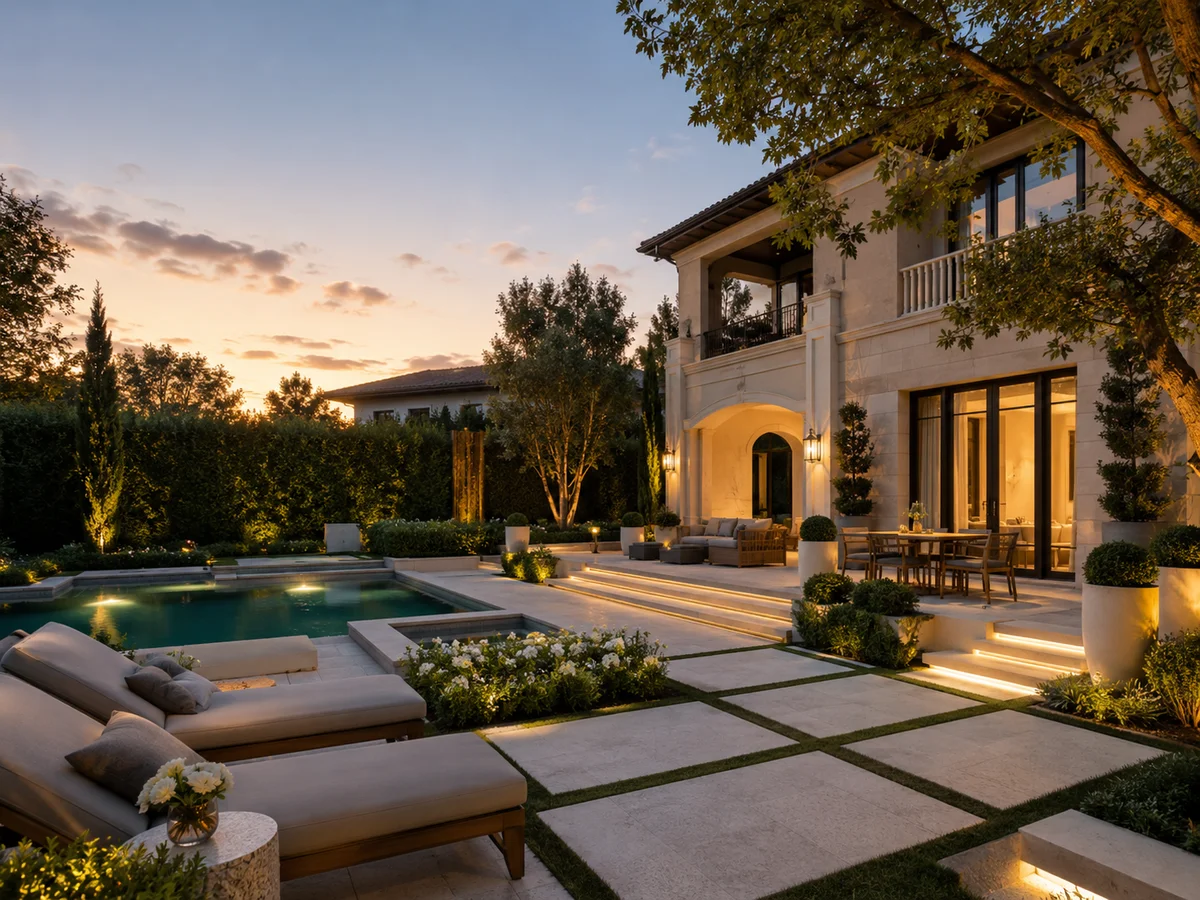
Many people only look at renderings during the day, but in real living experience, the night is when the garden most easily generates emotional value. Landscape lighting should not merely "illuminate the space"; it should create an atmosphere conducive to lingering, relaxation, and conversation through layering and rhythm. Common practices include: directional lighting for entrances and paths, accent lighting for plants and facades, low-level hidden lights for steps and borders, and warm, enveloping light for core seating areas. With this approach, the space gains greater depth and a sense of narrative at night.
6. Common Pitfalls in Garden Renovation Before & After
First, too many elements. Many projects try to cram in water features, sculptures, fire pits, pools, pergolas, and rockeries all at once, completely dispersing the visual focus.
Second, prioritizing renderings over usability. The design looks stunning but lacks shade, storage, or comfortable scale, resulting in a poor actual living experience.
Third, neglecting maintenance. If plant selection and paving choices do not consider the local climate and maintenance costs, they will be very demanding over time.
Fourth, overly bright lighting. Truly sophisticated nighttime scenes are not harsh, but soft, restrained, and layered.
Conclusion: A Good Garden Renovation Before & After Is Essentially About Designing a Better Lifestyle
Whether for a new project or an old garden renovation, truly valuable landscape design is not simple decoration. It substantively improves the living experience through spatial organization and the creation of life scenarios. A high-quality plan should balance aesthetics, function, maintenance, and long-term value. If you are planning your own residential outdoor space, it is advisable to engage in holistic design from a professional perspective early on, rather than piecing things together during the construction phase. Only then can a garden renovation before-and
Share Article
Related Articles

Tropical Villa Landscape Design: How to Create a Relaxed, Natural, Resort-Style Outdoor Atmosphere
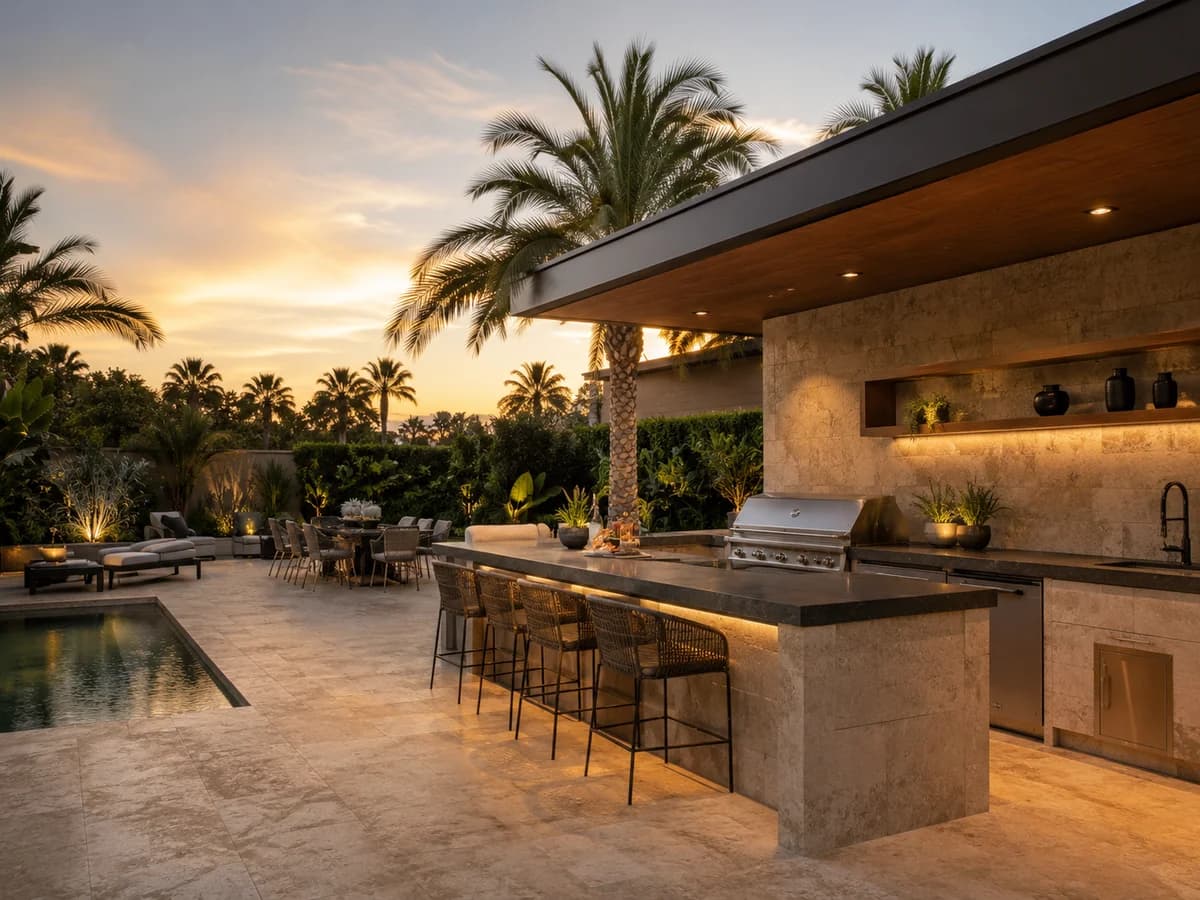
Villa Outdoor Kitchen Design: Elevating the Courtyard from Beautiful to Truly Usable Space